 /GLP-1Rx Program (Telehealth for Branded Meds)
About Your Zepbound®

More Than Meds
GLP-1Rx Program (Telehealth for Branded Meds) is More Than Meds. It’s a comprehensive solution that combines high-quality weight-loss medications with a powerful program for healthy lifestyle change. With GLP-1Rx Program (Telehealth for Branded Meds) you can:
Keep the muscle,
lose the fat
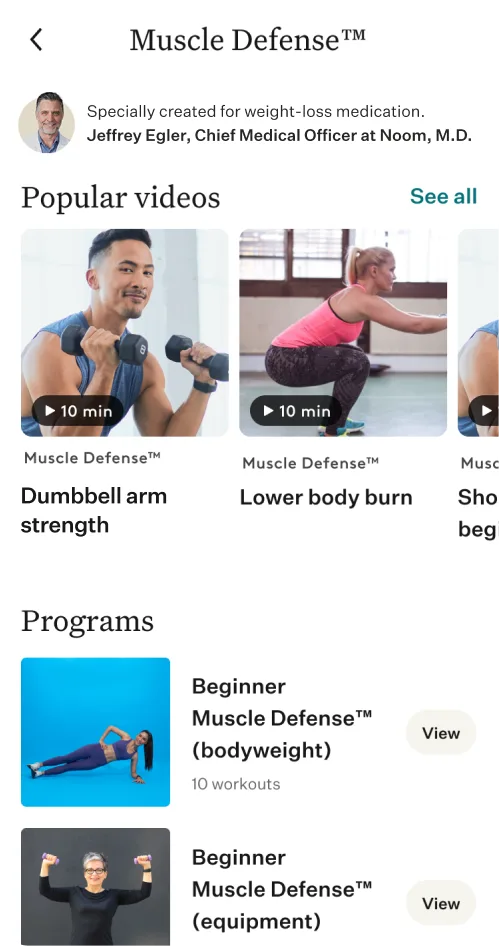
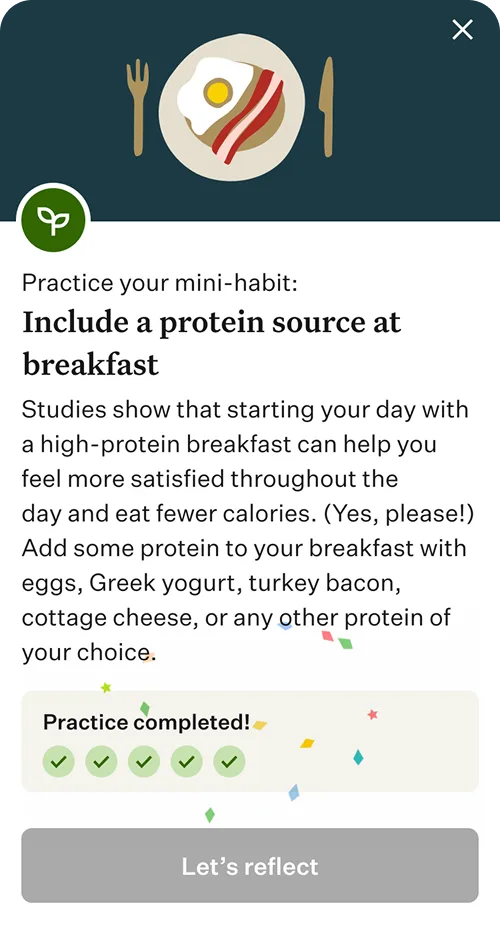
Develop
healthy habits
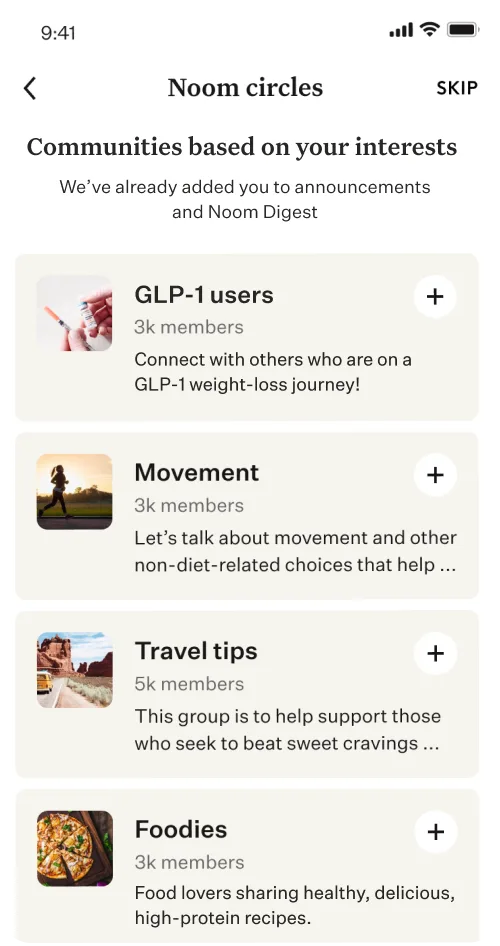
Find support in community
when available
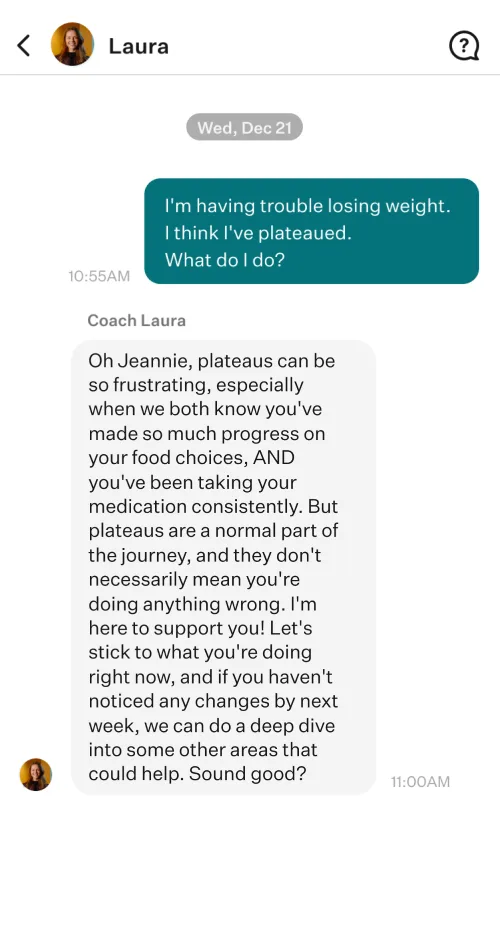
Ask your
1:1 coach anything
Frequently Asked Questions
What is Zepbound® and how does it work?
Zepbound® is an injectable prescription medicine that may help adults with obesity, or some adults with overweight who also have weight-related medical problems, to lose excess body weight and keep the weight off. Zepbound® should be used with a reduced-calorie diet and increased physical activity.
Zepbound® contains tirzepatide and should not be used with other tirzepatide-containing products or any GLP-1 receptor agonist medicines. It is not known if Zepbound® is safe and effective for use in children.
How do I administer my medication?
- Always use a new syringe and needle for each injection.
- Inspect Zepbound® visually before use. It should appear clear and colorless to slightly yellow. Do not use Zepbound® if particulate matter or discoloration is seen.
- Administer Zepbound® in combination with a reduced-calorie diet and increased physical activity.
- Administer Zepbound® once weekly at any time of day, with or without meals.
- Inject Zepbound® subcutaneously in the abdomen, thigh, or another person should inject in the back of the upper arm.
- Rotate injection sites with each dose.
Find How to inject videos for both the KwikPen® and vials at the link below: https://zepbound.lilly.com/hcp/getting-patients-started
What should I do with the syringe or pen needle after use?
- Put your used syringe, pen needle, and pen in an FDA-cleared sharps disposal container right away after use. Do not throw away (dispose of) pens in your household trash.
- If you do not have an FDA-cleared sharps disposal container, you may use a household container that is:
- made of a heavy-duty plastic,
- can be closed with a tight-fitting, puncture-resistant lid, without sharps being able to come out,
- upright and stable during use,
- leak-resistant, and
- properly labeled to warn of hazardous waste inside the container.
- When your sharps disposal container is almost full, you will need to follow your community guidelines for the right way to dispose of your sharps disposal container. There may be state or local laws about how you should throw away used needles and syringes. For more information about safe sharps disposal, and for specific information about sharps disposal in the state that you live in, go to the FDA’s website at: http://www.fda.gov/safesharpsdisposal.
- Do not recycle your used sharps disposal container.
What do I do if I miss a dose?
In an ideal world, you’ll never miss a dose. But sometimes life gets in the way. If you skip or miss a dose of your medication, administer the dose as soon as possible within 4 days (96 hours) after the missed dose. If more than 4 days have passed, skip the missed dose and administer the next dose on the regularly scheduled day.
How do I store my medication?
Single-dose vial storage:
- Store Zepbound® single-dose vial in a refrigerator at 2°C–8°C (36°F–46°F). If needed, each single-dose vial can be stored unrefrigerated at temperatures not to exceed 30°C (86°F) for up to 21 days. If a single-dose vial is stored at room temperature, it should not be returned to the refrigerator.
- Discard single-dose vials if not used within 21 days after removing from the refrigerator.
KwikPen® storage (Unopened KwikPen®):
- Store unopened single-patient-use KwikPen® in the refrigerator at 2°C–8°C (36°F –46°F). The unopened single-patient-use KwikPen® can be used until the expiration date on the label if kept in the refrigerator.
- If stored at room temperature [up to 30°C (86°F)], throw away unopened single-patient-use KwikPen® after 30 days.
After single-patient-use KwikPen® has been opened:
- Store opened (in-use) single-patient-use KwikPen® in the original carton in the refrigerator at 2°C–8°C (36°F–46°F) or at room temperature [up to 30°C (86°F)].
- Throw away opened single-patient-use KwikPen® after a total of 30 days at room temperature, 30 days after first use, or after taking 4 weekly doses, even if there is medication left in it.
What important safety information should I know?
Warnings – Zepbound® may cause tumors in the thyroid, including thyroid cancer. Watch for possible symptoms, such as a lump or swelling in the neck, hoarseness, trouble swallowing, or shortness of breath. If you have any of these symptoms, tell your clinician.
- Do not use Zepbound® if you or any of your family have ever had a type of thyroid cancer called medullary thyroid carcinoma (MTC).
- Do not use Zepbound® if you have Multiple Endocrine Neoplasia syndrome type 2 (MEN 2).
- Do not use Zepbound® if you have had a serious allergic reaction to tirzepatide or any of the ingredients in Zepbound®.
KwikPen®: Do not share your KwikPen® with other people, even if the pen needle has been changed. You may give other people a serious infection or get a serious infection from them.
Zepbound® may cause serious side effects, including:
- Severe stomach problems. Stomach problems, sometimes severe, have been reported in people who use Zepbound®. Tell your clinician if you have stomach problems that are severe or will not go away.
- Dehydration leading to kidney problems. Diarrhea, nausea, and vomiting may cause a loss of fluids (dehydration), which may cause kidney problems. It is important for you to drink fluids to help reduce your chance of dehydration. Tell your clinician right away if you have nausea, vomiting, or diarrhea that does not go away.
- Gallbladder problems. Gallbladder problems have happened in some people who use Zepbound®. Tell your clinician right away if you get symptoms of gallbladder problems, which may include pain in your upper stomach (abdomen), fever, yellowing of skin or eyes (jaundice), or clay-colored stools.
- Inflammation of the pancreas (pancreatitis). Stop using Zepbound® and tell your clinician right away if you have severe pain in your stomach area (abdomen) that will not go away, with or without nausea or vomiting. You may feel the pain from your abdomen to your back.
- Serious allergic reactions. Stop using Zepbound® and get medical help right away if you have any symptoms of a serious allergic reaction, including swelling of your face, lips, tongue or throat, problems breathing or swallowing, severe rash or itching, fainting or feeling dizzy, or very rapid heartbeat.
- Low blood sugar (hypoglycemia). Your risk for getting low blood sugar may be higher if you use Zepbound® with medicines that can cause low blood sugar, such as a sulfonylurea or insulin. Signs and symptoms of low blood sugar may include dizziness or light-headedness, sweating, confusion or drowsiness, headache, blurred vision, slurred speech, shakiness, fast heartbeat, anxiety, irritability, mood changes, hunger, weakness or feeling jittery.
- Changes in vision in patients with type 2 diabetes. Tell your clinician if you have changes in vision during treatment with Zepbound®.
- Food or liquid getting into the lungs during surgery or other procedures that use anesthesia or deep sleepiness (deep sedation). Zepbound® may increase the chance of food getting into your lungs during surgery or other procedures. Tell all your healthcare providers that you are taking Zepbound® before you are scheduled to have surgery or other procedures.
Common side effects:
- The most common side effects of Zepbound® include nausea, diarrhea, vomiting, constipation, stomach (abdominal) pain, indigestion, injection site reactions, feeling tired, allergic reactions, belching, hair loss, and heartburn. These are not all the possible side effects of Zepbound®. Talk to your clinician about any side effect that bothers you or doesn’t go away.
- Tell your doctor if you have any side effects. You can report side effects at 1-800-FDA-1088 or www.fda.gov/medwatch.
Before using Zepbound®:
- Your clinician should show you how to use Zepbound® before you use it for the first time.
- Talk to your clinician about low blood sugar and how to manage it. Tell your clinician if you are taking medicines to treat diabetes including an insulin or sulfonylurea.
- If you take birth control pills by mouth, talk to your clinician before you use Zepbound®. Birth control pills may not work as well while using Zepbound®. Your clinician may recommend another type of birth control for 4 weeks after you start Zepbound® and for 4 weeks after each increase in your dose of Zepbound®.
What should I do if there is a problem with my shipment or medication?
Please contact LillyDirect at 1-844-LLYDIR1 (1-844-559-3471) to reach someone who can help.
For more information, visit:
https://zepbound.lilly.com/weight
This information is not comprehensive. Please see the Prescribing Information for complete safety information.